CONVERGENCE 2025 was a one-day event held on 30 October 2025 in conjunction with project partners, EU-CHECK (an International Research Network – funded by the French CNRS) and the Horizon Europe project, CyberSecPro, hosted with the friendly support of the Representation of the State of Hessen to the EU at rue Montoyer 21 in Brussels.
The event is a demonstration of TDL’s commitment to fostering a sense of community amongst those interested in coming together and sharing ideas about the future of technology as it impacts business and society in Europe. It also continues TDL’s focus on the main drivers of digital transformation, from the impact of GenAI to the innovative initiatives that will determine our future.
Background
The popular uptake of LLMs (large language models) over the last 12 to 18 months has been astonishing. The potential for the future of our society as well as the finance, healthcare, travel and manufacturing sectors has attracted much speculation. This year’s one-day event, the fifth annual, brought together representatives from the Trust in Digital Life Association (TDL) together with the projects EU-CHECK and the CyberSecPro in a series of sessions that focussed on the impact AI is having on different social, business and technological domains, from skills and recruitment to military defence, both today and into the next couple of years - which is as far as anyone can realistically see.
We were particularly excited to be hosting an interactive session with a group of GenAI models engaging in an experimental and lively panel conversation, that would serve to illuminate the path towards robust regulatory frameworks with regards to critical questions, such as cognitive security and social manipulation.
CONVERGENCE 2025 provided attendees with the time and space to network and share their visions and expectations for the future. This was a great opportunity to discuss and debate with peers the key issues and topics facing what lies in store for Europe in the transition to ‘Everything Everywhere AI At Once’.
The Programme
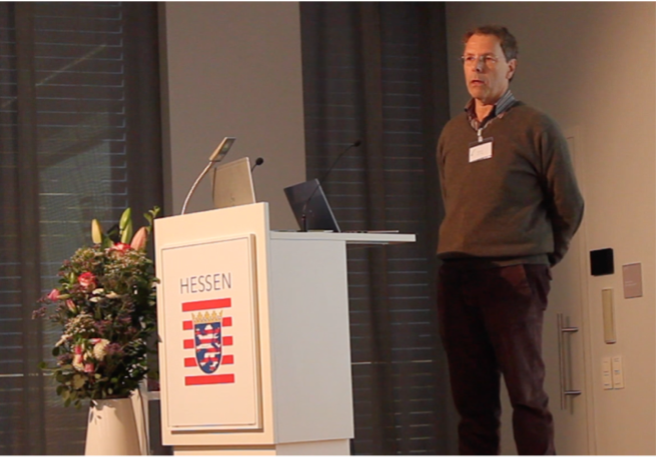
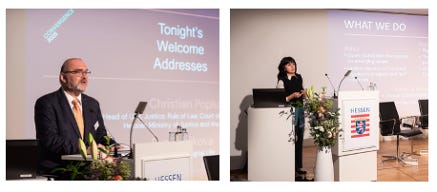
After a lunch sponsored by the Horizon Europe project, CyberSecPro, the conference participants were welcomed by Christian Poplutz, Head of Unit, Justice, Rule of Law, Court of Justice of the EU, Hessian Ministry of Justice and the Rule of Law, followed by David Goodman, Senior Consultant at Trust in Digital Life who laid out the programme for the rest of the day.
Skills for the Digital Economy
The first session covered skills for the digital economy, moderated by Christos Douligerisfrom the Department of Informatics, University of Piraeus Research Centre with four contrasting perspectives, aligning academic and industrial expectations and requirements, presented by:
· Spiros Borotis, Senior Product Manager/Analyst, Gruppo Maggioli
· Vanessa Lewis, Vice President of Recruitment, Nexova Group
· Marc Vael, Chief Digital Trust Officer Esko Trust Center & President SAI.BE
This panel looked at the challenges and opportunities in the cybersecurity industry, particularly in relation to talent and skills. While there is a growing pool of talent, the industry’s fast pace and dynamic nature require innovative and agile responses to the workforce and skills gap. There is an important distinction to be made between the workforce and the skills gap, and the need for better mechanisms to ensure that the talent coming through the pipeline is equipped with the necessary skills and abilities.
• Should companies be more open to hiring non-conventional talent and consider skills-based hiring.
• Is cybersecurity certification more important than developing a person’s abilities or soft skills?
The conclusion was that future requirements will demand both technical and soft skills to fit organisational environments dominated by AI applications, threats and challenges.
Trustworthiness in AI for Defence
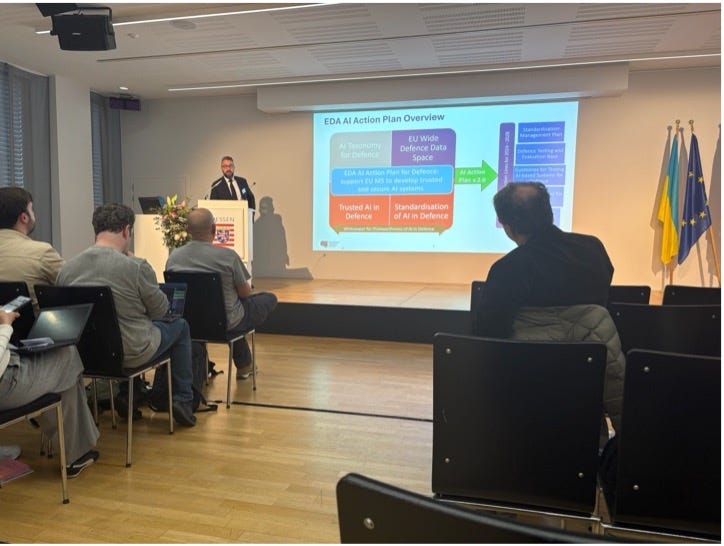
After the coffee break, David Goodman introduced the keynote speaker, Isidoros Monogioudis who is a Project Officer of Information Technologies at the European Defence Agency (EDA). He is a retired Colonel of the Greek Armed Forces with extensive experience in Cyber and Information Systems (CIS) security. As a project officer, he mainly coordinates research and innovation activities related to CIS, networks, and AI. Before joining the EDA, he worked as a cybersecurity architect in the private sector for five years after retiring from the Greek armed forces in 2017. His expertise includes threat intelligence, incident handling, and cyber defence exercises at national and international levels, including with NATO.
Today, he leads the EDA’s Action Plan on AI for Defence which focuses on ensuring the secure, safe and trusted use of AI in military systems and training.
His keynote covered the EDA’s research activities leading up to presenting the findings and recommendations of the co-authored collaborative whitepaper ‘Trustworthiness for AI in Defence‘ which reflects a ‘food for thought’ approach and reflects the combined view of AI experts and stakeholders from the defence industry, academia and ministries of defence in the context of the EDA Action Plan on Artificial Intelligence for Defence (AIDAP) to foster collaboration on military AI, focusing on projects like autonomous drones (AUDROS) and AI for navigation (ATENA) to boost capabilities in areas like electronic warfare, intelligence, surveillance and reconnaissance, as well as logistics. This plan aligns with broader EU initiatives, such as the AI Continent plan for AI factories, launched on 9 April 2025; and the European Defence Fund (EDF) investments, aiming to create trustworthy, powerful AI for defence by connecting industry, research, and military needs, emphasizing human oversight and strong data foundations.
The plan also seeks to address the topics of trusted AI and verification, validation and certification requirements analysis and provide the appropriate knowledge of the current global status considering the AI regulations, standards and frameworks for AI trustworthiness. It also recommends the follow-up activities that will further assist the EU Member States and defence industry to better prepare, plan and develop the future secure AI systems aligned with the identified expectations. He talked further about the challenges of ethical AI, the role of value-based engineering as well as a path forward to a more ethical AI. An updated AI Action Plan (v2.0) is expected to be approved by the end of 2026.
In addressing questions, Isidoros gave frank and transparent responses and emphasised the proactive mission to collaborate with civilian organisations, which participants were invited to join.
Exploring the state of the interplay between societies and generative AI by 2031
Following the keynote, the audience was treated to a particularly unusual panel involving a moderator and three avatars. The context of the ensuing discussion pivoted around the next EU Multiannual Financial Framework, currently being discussed in Brussels, will be at its mid-point in 2031. This interactive panel examined how generative AI (GenAI) will have become deeply intertwined with societal development by that date – reshaping creativity, communication and knowledge while also raising new challenges for trust and security. This session considered both the opportunities and risks of GenAI’s growing influence, including its potential to enrich collaboration and understanding, as well as its capacity to spread misinformation, manipulate perception and collect sensitive data. In an experimental and lively format, GenAI models took part in a panel conversation alongside human experts, offering a unique, self-reflective exploration of how these systems perceive and explain their societal role. The conversations aimed to illuminate the need of forward-looking regulatory frameworks that strengthen cognitive security and social resilience, while preserving GenAI’s capacities to serve as a creative and analytical partner that boosts societal productivity and innovation.
The moderator and chief inquisitor was Afonso Ferreira, who is Research Director at CNRS – IRIT (Centre National de la Recherche Scientifique – Institut de Recherche en Informatique de Toulouse). The session was offered through a collaboration between Afonso, Marcos Rodriguez Vega from the University of La Laguna in Tenerife, Iru Expósito (@iruexposito) and Carolina Polito from the Centre for European Policy Studies (CEPS) in Brussels, all under the framework of the International Research Network (IRN) EU-CHECK, funded by the CNRS.
The unique panel consisted of three avatars with individual distinctive personas and character. They were:
· Andrea Polito – civil society representative focusing on rights, privacy and digital liberties, structured around EU frameworks like GDPR and the AI Act.
· Alex Silva – industry advocate focused on innovation, competitiveness and practical safeguards that are proportionate to risk.
· Sam Vega – MEP (Member of the European Parliament) profile balancing innovation with precaution, grounding arguments in EU policy tools and legislative mechanics.
For the session GPT-5 was used with a global memory that tracked what each avatar and the speaker had said throughout the conversation. Each avatar was modelled from a concise persona definition specifying their role, tone, policy framing and debate playbook. One of these personas was loaded as the system prompt at each turn, depending on who was “speaking”, so the model would consistently stay in character. All personas also ran through a shared set of “rails” to keep style, safety and structure coherent across the panel.
Before the distinguished avatars became exhausted from questions, the conference broke for an hour to relax, reset and enjoy some refreshment as more guests arrived before the evening session.
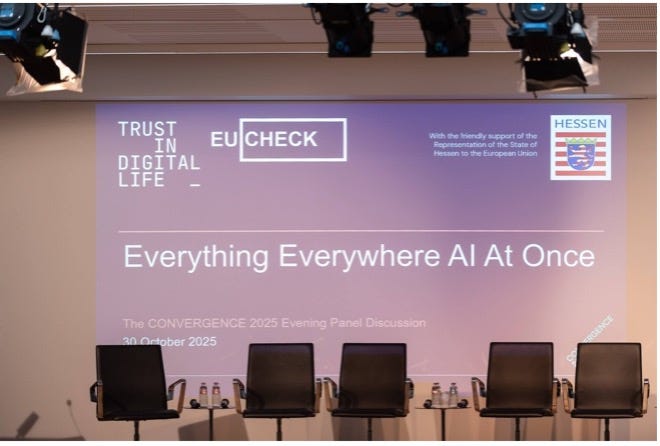
Everything, Everywhere, AI At Once
The evening session began with welcome addresses from Christian Poplutz who is Head of Unit, Justice, Rule of Law, Court of Justice of the EU at the Hessian Ministry of Justice and the Rule of Law. He was followed by Svetla Nikova, who is the Chair of the Trust in Digital Life association as well as Research Manager at COSIC at KU Leuven.
The evening’s discussion took as its overall theme ‘Everything, Everywhere, AI At Once’ exploring the perspectives of the expert speakers on the assumption that we are incorporating AI into everything we do – and, if we haven’t already, we will do very soon.
From previous experience, the often unspoken elephant in the room, irrespective of the headline technical or policy domain, is how the use of AI will be accommodated and what its impact will be in the short and long term. Today almost wherever we look we are presented with visions of how artificial intelligence will dominate both our working and personal lives, which, depending on whose proposition it is, could be very exciting or deeply troubling.
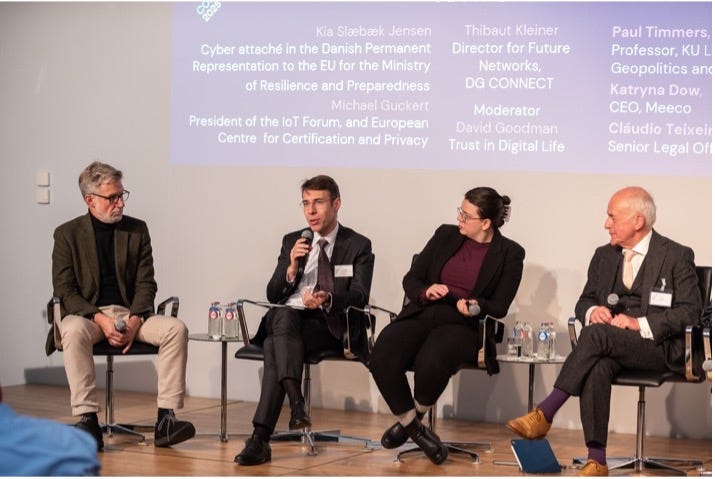
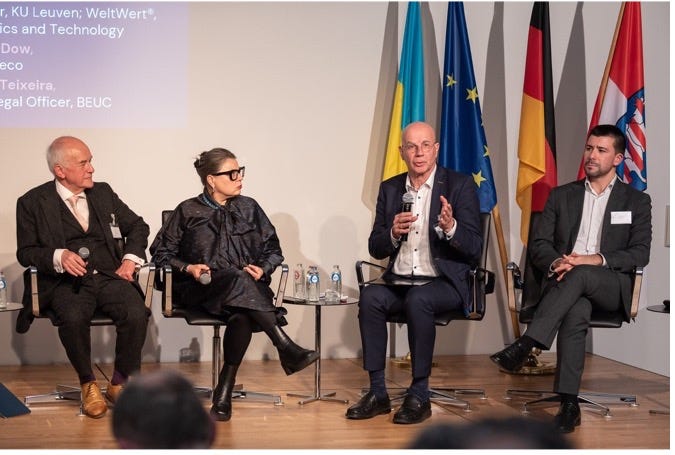
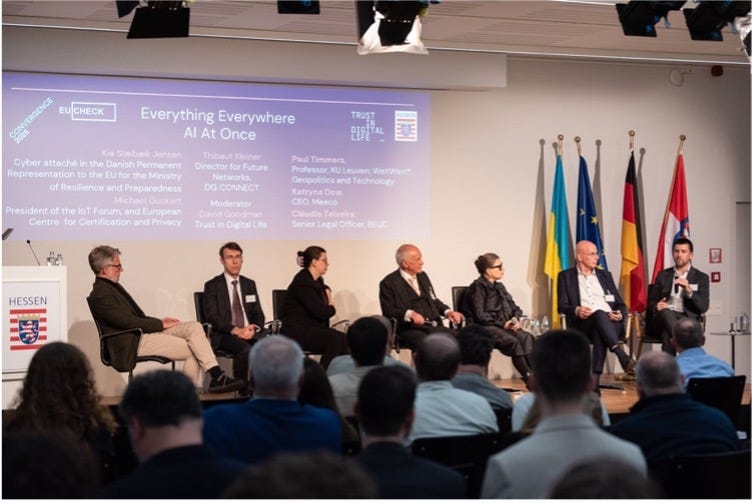
From left to right: Thibaut, Michael, Katryna, Kia, Paul and Claudio
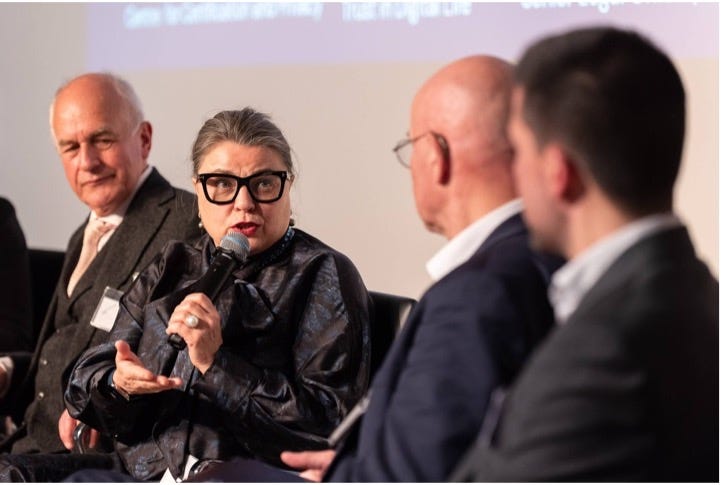
The speakers’ backgrounds pivoted round the emerging technologies and trends, from cybersecurity to digital identity to quantum computing, as well as innovative initiatives, such as the quest for European digital sovereignty, that already impact European businesses and citizens and are certain to do so much further in coming years. The panel started with introductions from each of the panellists to explain their area of work, as it is currently, and how they envisaged AI influencing what they do and the impact it would have.
Thibaut explained the function of the Future Networks Directorate in the European Commission which includes the deployment of advanced networks, like fibre and 5G, preparing for future standards like 6G, and fostering the necessary infrastructure to support emerging technologies like AI and cloud computing. Its efforts focus on simplifying rules for network rollout, promoting research and innovation, and ensuring Europe’s digital infrastructure is robust, secure and capable of meeting future needs. Long committed to preparing for the future of the Internet in Europe by keeping the Internet dynamic, competitive and secure assessing the main challenges ahead in a European context and preparing for possible EU policy responses.
Michael talked about his roles both as a professor in an academic institution as well as a spokesperson for hessian.ai. Based in Darmstadt, the Hessian Centre for Artificial Intelligence has as its mission to drive research excellence, education, practice and leadership in AI to foster economic growth and improve the human condition. Based on cutting-edge research as conducted at the TU Darmstadt and other Hessian universities, significant contributions are made to the research and development of novel AI systems with human-like thinking and communication capabilities with the goal of promoting the transfer of excellent basic research with concrete practical relevance to both industry and society.
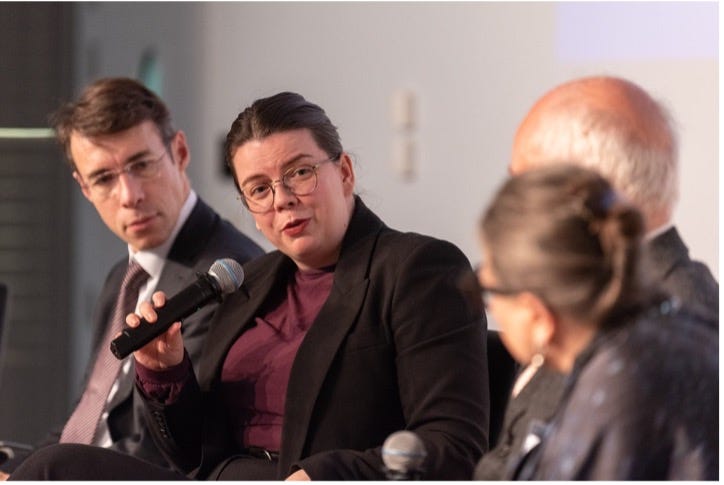
Kia as the cyber attaché in the Danish Permanent Representation to the EU during Denmark’s six-month Presidency of the Council of the European Union talked about the burden of responsibility for monitoring cyber incidents across Europe until the transition to Cyprus, the next holder of the post. Until then, Kia is chair of the Horizontal Working Party on Cyber Issues and, inter alia, Member States are getting ready for the upcoming revision of the Cybersecurity Act, which anticipates the need to secure a strong mandate for ENISA. As a result of the EU’s Cyber Blueprint being adopted in June, the Danish Presidency will shortly seek to ensure that it also works in practice with a focus on how to respond at the political level, using the information gathered at the technical and operational levels to discuss concrete measures to be taken when the EU faces a cyber crisis or a large-scale cyber incident.
Katryna is CEO of Meeco and splits her time between Australia and Europe, where Meeco has offices and development teams. a personal data platform that enables people to securely exchange data via the API-of-Me with the people and organisations they trust. Katryna has pioneered personal data rights for more than 20 years. She envisioned a time when personal sovereignty, identity and contextual privacy would be as important as being connected. Now within the context of GDPR and Open Banking, distributed ledger, cloud, AI and IoT have converged to make Meeco both possible and necessary as a personal data platform that enables people to securely exchange data with the people and organisations they trust.
Paul was introduced as not requiring any introduction to a Brussels audience given his background with the Commission and his output and collaborations on subjects as diverse as cybersecurity, e-ID, digital privacy, digital health, smart cities and e-government over many years. But it would have been churlish not to do so!
Earlier this year, he was one of several co-authors on a recently published report EuroStack - A European Alternative for Digital Sovereignty which contains an ambitious vision of both what needs and what has to be done to achieve the goal of digital sovereignty in Europe. Backed by a truly impressive roll call of European businesses, government agencies and knowledge institutes, this initial stake in the ground lays out the rationale for such a painstaking practical initiative and outlines an all-encompassing landscape of actions and political resolutions to disentangle the external digital dependencies Europe makes over a period of ten years.
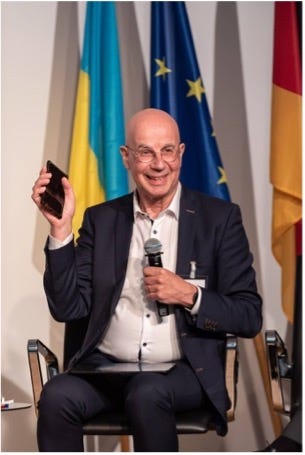
One of the main points Paul wanted to make was that we, in Europe, should also think outside the box, such as taking AI-as-a-platform seriously. Such new paradigms may give Europe the opportunity to make a leap in digital autonomy and do so in a practical way. Consider an AI-based mobile phone made in Europe, and one that is not captured by big tech yet builds on what is already feasible today. For instance, can we combine an approach like that of Fairphone, which already today sells an affordable, capable, upgradable environmentally friendly, de-Googled smartphone from Europe, with energy-efficient AI chips as currently developed in Europe? Time will tell.
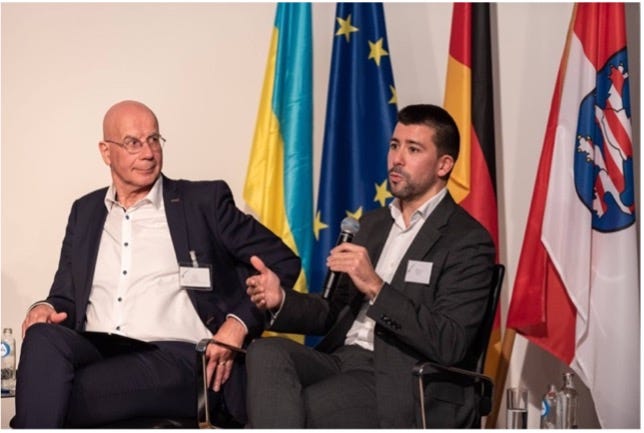
Finally, Claudio is a regular participant on CONVERGENCE panels representing BEUC, the European Consumer Organisation which is the umbrella group for 45 independent consumer organisations from 32 countries. As such, he was notionally shouldering the responsibility on behalf of the 450 million citizens of the EU for how to explain the increasing impact of AI in many of our online transactions and overwhelming hype around AI in most forms of media.
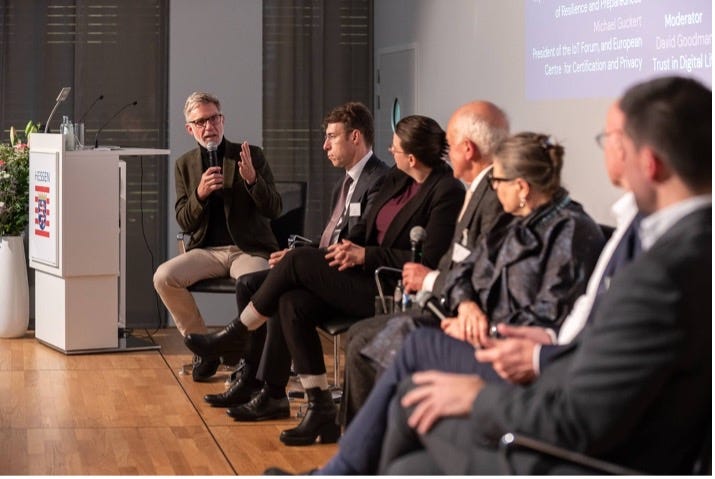
The ensuing discussions and interventions to follow generated different and enlightening insights and recommendations from the perspectives of technology and policy to that of the individual consumer.
There was still time for questions from the audience which touched on some of the issues associated with the huge energy resources it is assumed that AI systems will require.
The final question from Sarah Christoyannis and an observation and a question from Stefano, another regular at TDL events
The event concluded with individual quick fire responses from the panel to the question as to whether AI would have a positive or less than positive influence in the future on business and society. With one or two hesitations, the overall consensus was that by working together and continuing to talk about the threats and challenges we can ensure that AI will be a force for good, not only in Europe but beyond as well.
Later ...
The evening finished with a social reception, involving food, drink sponsored by the EU CHECK project - and much socialising. It had been anticipated that the events and discussions of the day would ensure that the latter part of the evening would attract even further debate and it did not disappoint!